To salvage some degree of respect for the government agencies involved with regulation they do have to meet standard quotas as do any law enforcement agencies.
For those agencies, it can be taxing to focus on one specific thing entirely. People are out there regulating a lot of the wildlife and curbing any poaching.
It's a difficult, demanding task - Alaska is a great and vast wilderness still. And on many levels law enforcement does not have the body to fight the battle on all fronts. And there will always be poachers - that's a given - the severity is what has to be defined and curbed.
For law enforcement, it's impossible to chase a helicopter on land - by snowmobile, snowcat, truck or water let alone into remote territory where the wolfs poached would most likely located. Add the fact that, depending on what rating their flying under, they might not need to have a flight plan and ultimately that leaves law enforcement agents the great white arena of Alaska to go fishing for a possible criminal.
Adding to the problem following people, as well, is also called police harassment. If you're trying to follow a chopper even with another chopper - yeah, you're going to have an issue unless you've got some thing backing your suspicion. Otherwise it's without just cause (and no, owning a helicopter wouldn't vouch for having just cause).
Another problem with basic tactics for officials with, say, decoys in this scheme of things is that choppers can usually scare out anything actually living and decoys don't work from the air. The strategies for netting illegal activity can be pretty demanding.
In some arenas it's awful hard to police things - and sometimes you just have poor policing (either bad LEO's or not enough of them).
There's a difference - and none of us right now have enough information to tell what takes the cake.
What could possibly help is mandating a flight plan submission for VFR (Visual Flight Rating) flights in areas that have problems. It might be the key to knowing what people are up to in the sky yet at the same time that infringes upon the rights of VFR fliers - who don't have to submit a Flight Plan. Regulation and policy need to be helpfully sculpted to this issue.
The problem itself needs to be better identified - where is there pack thinning? Where are the indications of poaching coming from? How can you set up a sting operation? What do wildlife officials in charge of the wolf population have to say? What about wolf researchers (not fanatical campaigns, I'm talking biologists here) who aren't governed by the bodies that LEO's are - do they have anything to say on the issue?
These are some of many questions that need answering.
'Copter pads and locations might need to have commercial regulation and unscheduled checks (they may actually have them, I don't know). But I suppose there is regulation that can ultimately branch into it if there is a problem. Granted, the problem needs to have better proof and context prior to law, policy, and regulation being constructed.
What needs to happen is somebody needs to investigate, honestly. And not JUST for the sake of the wolf but for everything else out there that's hunted by chopper.
Someone (not a journalist or reporter - they have the attention span of about 3 whole seconds) but a good writer and investigative force as well as a legislator. Usually that someone is from another federal agency dealing with environmental issues that would deploy a middle-man to shed some the problem to achieve a better answer - and those persons are stretched pretty thin right now (I'd know, I work for one).
Once someone cues in on the problem's true nature and details then it makes it easier for something to plot and execute an operative plan with decent regard to the wildlife being poached. And it makes it easier for us to write our local officials.
Hopefully, in the face of all adversity, the wolf will ultimately keep it's re-achieved placement - even amongst it's human neighbors who seemingly dominate it's destiny.

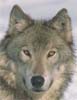



 how can people do this, they have no right to and it is not like the wolves are hurting anything. They don't keep livestock in Alaska, they just run free don't enter the towns or anything.