
Anyway, ITT we discuss about werewolves acting as actual mounts that are able to do much more than gallop, graze, poop, neigh, and do mean horse kicks... Alright, i guess i don't know jack about actual war horses.
According to my written universe, werewolves of appropriate size and ability can be trained to become mounts for either human riders or fellow shapeshifter riders in human forms. The lower ranks would see to it that the mounts go about using standard weaponry and equipment, and the rider be of a similar caliber, though experienced riders can help train the mount using whatever knowledge is at the riders' disposal. As the mount climbs up in ranks, they are given a wider selection of weapons, though they are permitted to stick to the weapon their hands (or paws) are familiar with in battle. An "active ranks supervisor" would be needed if a mount wishes to advance quickly in ranks due to circumstances such as previous experiences.
Weapons range from the standard weapons found in regular armies, but training allows for use of more exotic weapons.
Saddles are also important due to the shape they're designated to be. Unlike regular saddles, shapeshifter saddles must be able to accomodate the rider in situations that regular saddles are unable to do, namely the part where sharp changes of mount posture are prominent.
Teamwork can be highly beneficial to both mount and rider, as any partnership with excellent teamwork can help each other in combat with minimal trouble indirectly caused by each other, or be able to sustain each other when not in combat. Poor teamwork may cause the opposite effect, but in some cases, overcoming this predicament serves as a valuable lesson to both mount and rider if they are to learn from it.
--
The picture below is of a highly skilled shapeshifter archer and a skilled, but relatively inexperienced wolf mount. Under the archer's request, the saddle is modified to completely expose the saddle itself to allow for versatile foot positioning, while the mount both goes to bipedal or quadrupedal positions, as the archer is capable of constantly changing his footing. As you can see, the shape of the saddle favors a more vertical design with the mount's head facing skyward. Less experienced riders would find this design somewhat disadvantageous if the mount was to be in a vertical position with the mount's head facing earthward. This can be offset with the lower part of the saddle hollowed, and the saddle surface be made to be able to flex backwards when the rider pulls his back outwards. Oh, and uh, note that the mount also wears a helmet with what looks to be a plate that's designed to protect the rider from the front side. The archer is THAT good for him to be mostly standing when shooting.

--
And as a side note, I wrote all that without a lick of research. Yay me.

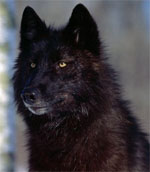
 Not many folks tie werewolves to use as mounts, I suppose, but the idea's rather interesting. A thinking mount complete with big a** fangs and claws would be incredibly handy.




 Legolas, eat your heart out.